Stroke metrics
Stroke rate, stroke count, and tempo measured frame by frame across each segment of the race. Not averaged. Not eyeballed. Each stroke cycle recorded individually, so the breakdown in the third fifty is visible, not averaged away.
Every audit is grounded in frame-accurate data across four measurement lenses. The analysis produces a voiceover video breakdown and a written technical intervention plan - no calls, no scheduling, no pool-deck theater.
These are the four dimensions the audit applies to your footage. Each is measured objectively - the data produces the finding, not the other way around.
Stroke rate, stroke count, and tempo measured frame by frame across each segment of the race. Not averaged. Not eyeballed. Each stroke cycle recorded individually, so the breakdown in the third fifty is visible, not averaged away.
DPS quantified per length to expose where propulsion is being created and where it is quietly leaking away. A swimmer can hold tempo and still lose DPS - and when that happens, the velocity curve reveals it before the split time does.
Entry, catch, pull, and recovery timing isolated so the precise moment technique breaks down becomes visible. Phase transitions are where most inefficiency hides. Identifying them by frame rather than by feel is what makes a corrective plan actionable.
Segment-by-segment velocity tracked to locate the fade, then tied back to the mechanical cause behind it. The velocity profile tells you when the race was decided. The stroke data tells you why.
The distinction matters. A coaching call with video is a qualitative conversation where the footage is a reference point. This is a quantitative analysis process where the footage is the primary data source and every finding has a frame number behind it.
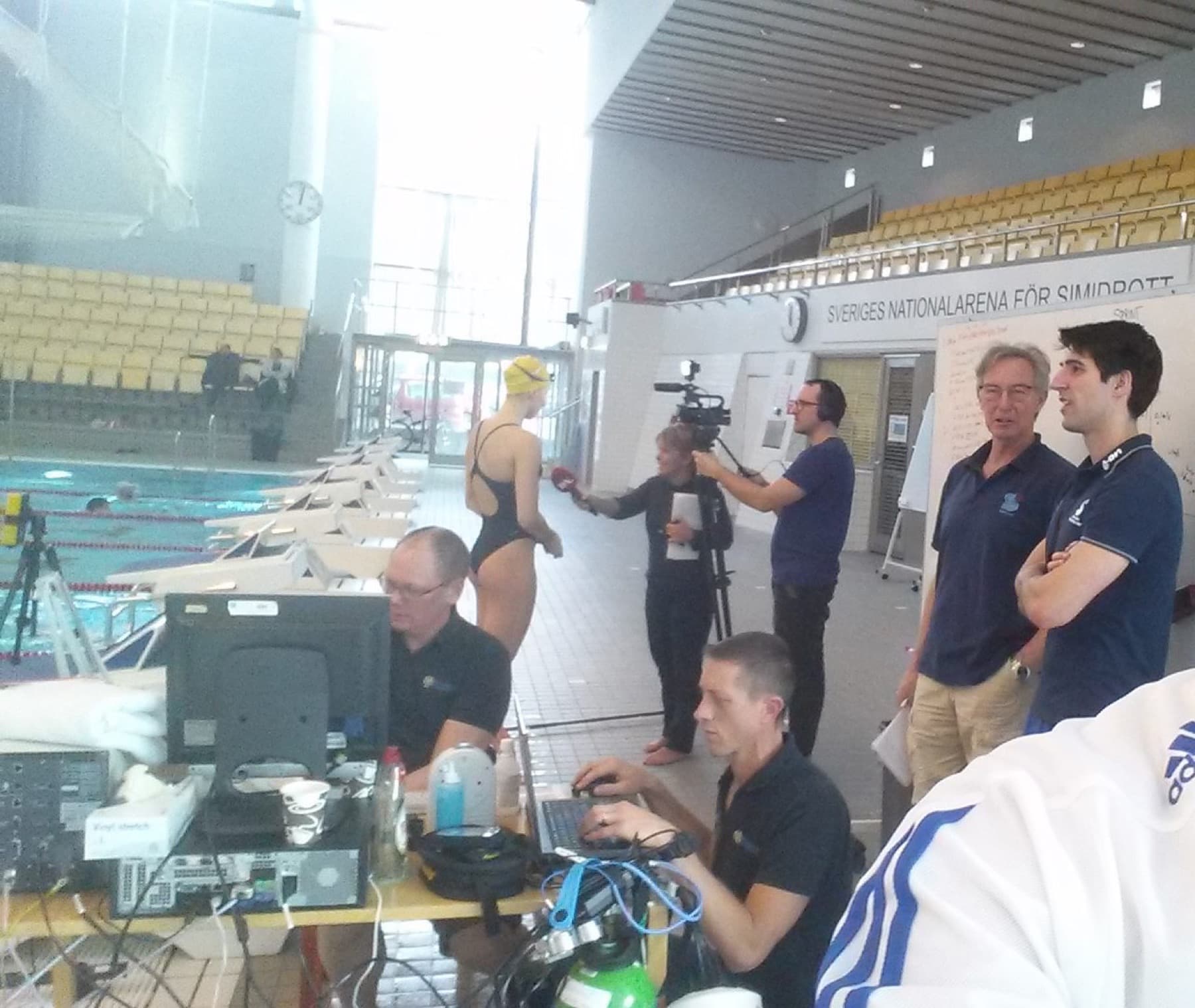
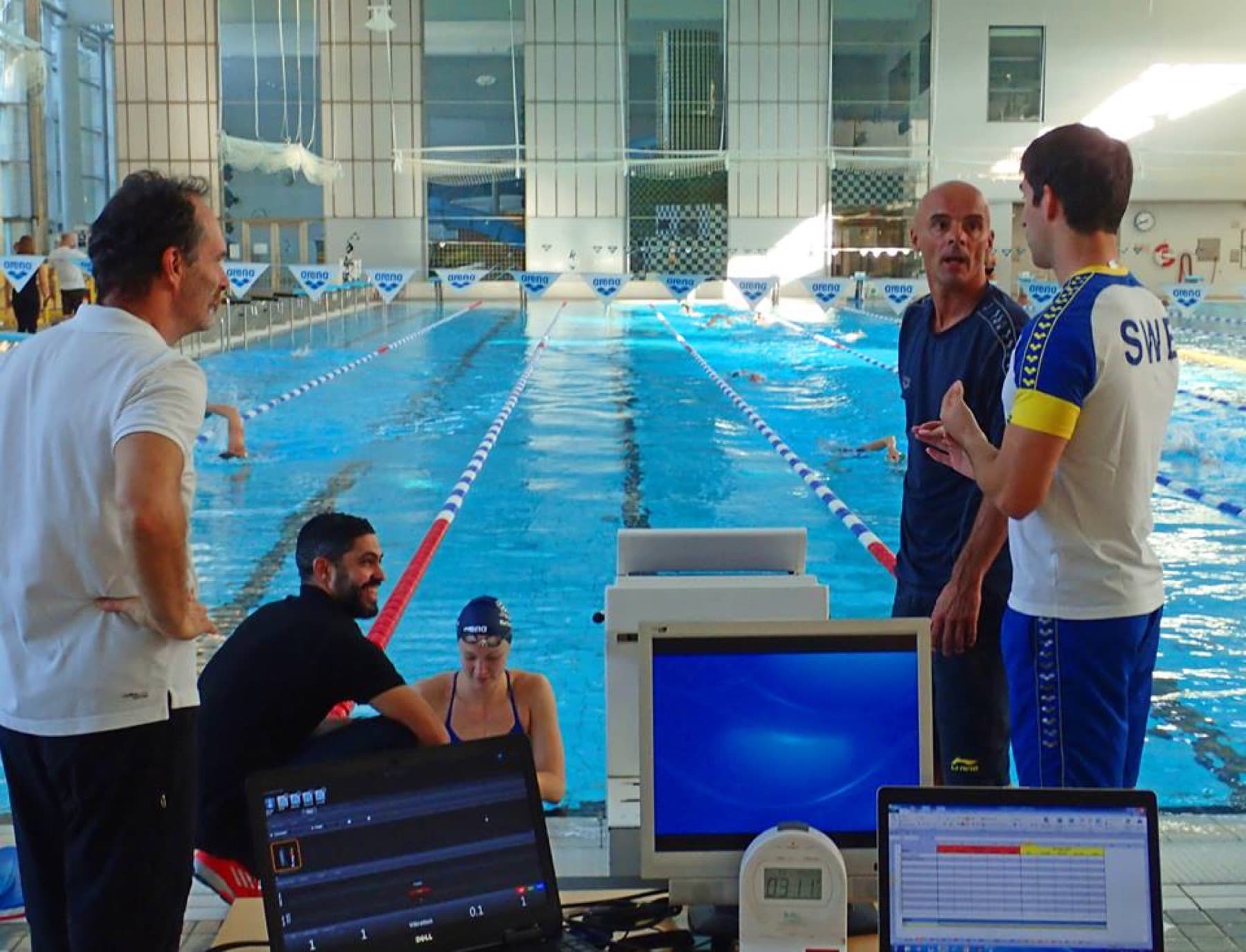
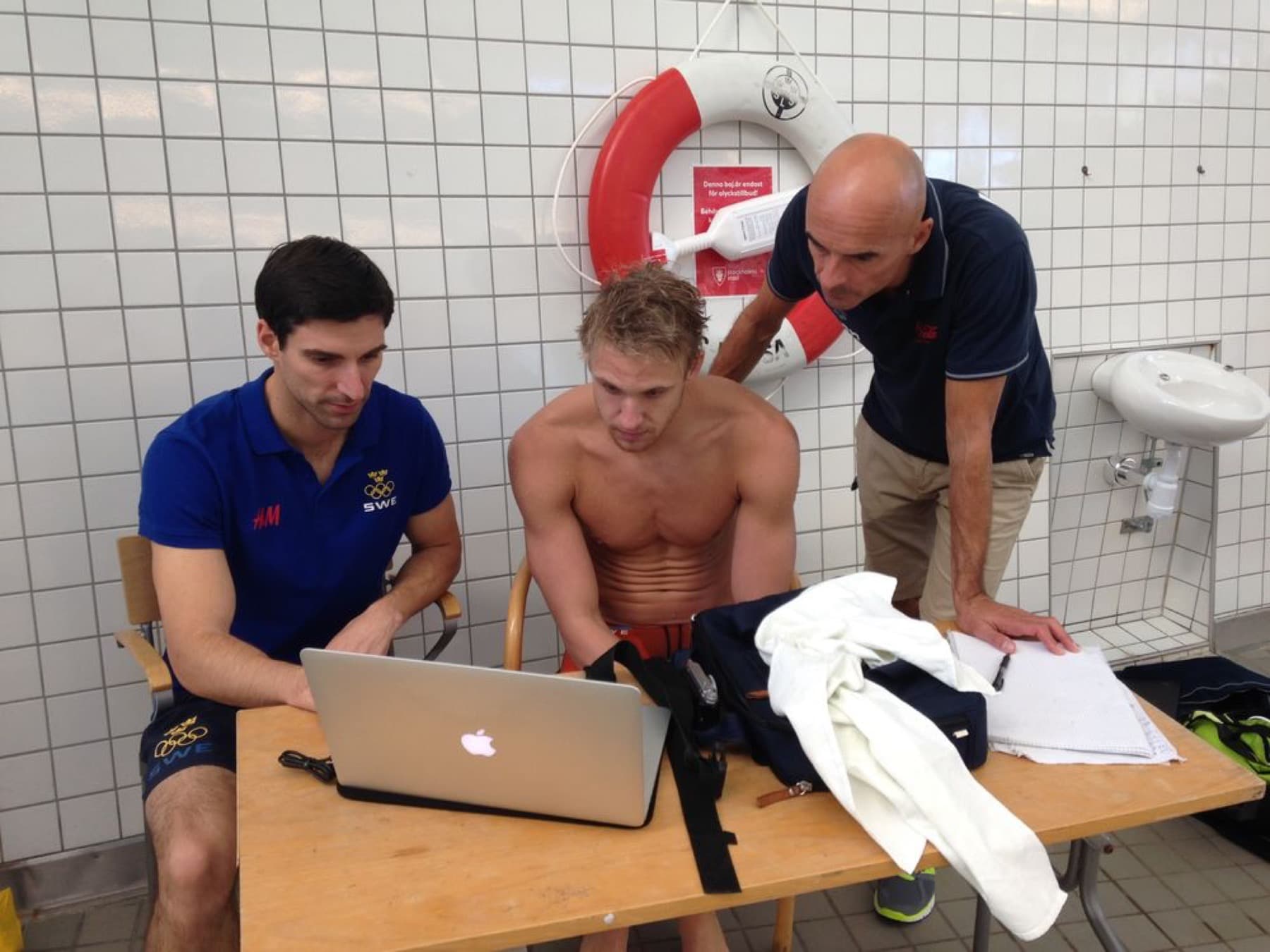
The analysis rig used in the Swedish national program was built to capture high-frame-rate footage from multiple angles simultaneously and resolve stroke mechanics at a resolution that makes the difference between a 1:48 and a 1:52 visible. That is the standard applied to every audit here.
The photos below are from real working sessions at that level. They are not stock imagery. They are the environment the method was developed in.
Four stages from footage to delivered analysis. The clock starts when footage is complete. You do not need to be available at any point during the process.
High-frame-rate footage from at least one angle, ideally multiple. 5 business days begins on complete footage upload. The footage specification is provided with your audit confirmation.
Every clip is reviewed frame by frame. Stroke data is compiled. Velocity profiles are constructed. Phase timing is isolated. The process takes as long as the footage requires - there is no clock pressure on the analysis side.
A 15 to 20 minute asynchronous video in which the footage is annotated and walked through in full. You see exactly what the analysis sees, with the frame-accurate evidence on screen.
A structured technical document translating the findings into a training plan you can act on immediately. Prioritized by impact, written for both athlete and coach.
Delivery commitment: Delivered within 5 business days of complete footage. Includes 1 round of written follow-up within 14 days.
The async model is not a constraint on availability. It is the correct structure for frame-accurate biomechanical analysis. A live session - whether in person or on video - compresses the analysis into whatever time is available, and forces real-time communication to compete with focused observation.
The depth of a biomechanical read is directly proportional to uninterrupted time with the footage. The voiceover video is produced after the full analysis is complete, not during it.
The deliverables are also more useful in async format. A written intervention plan can be consulted repeatedly across a training block. A video breakdown can be paused, rewound, and shared with a coach or training partner. A single live call cannot be any of those things.
The async model also means geography is irrelevant. Elite-level biomechanical analysis is available to any athlete with a camera and an internet connection, anywhere in the world.
No calls. No scheduling. A voiceover video breakdown and a written technical intervention plan, delivered asynchronously.